Split a Combined Travel PDF into Separate Expense Records
Separate hotel, rail, taxi and meal pages before recognition so each transaction keeps the correct source.
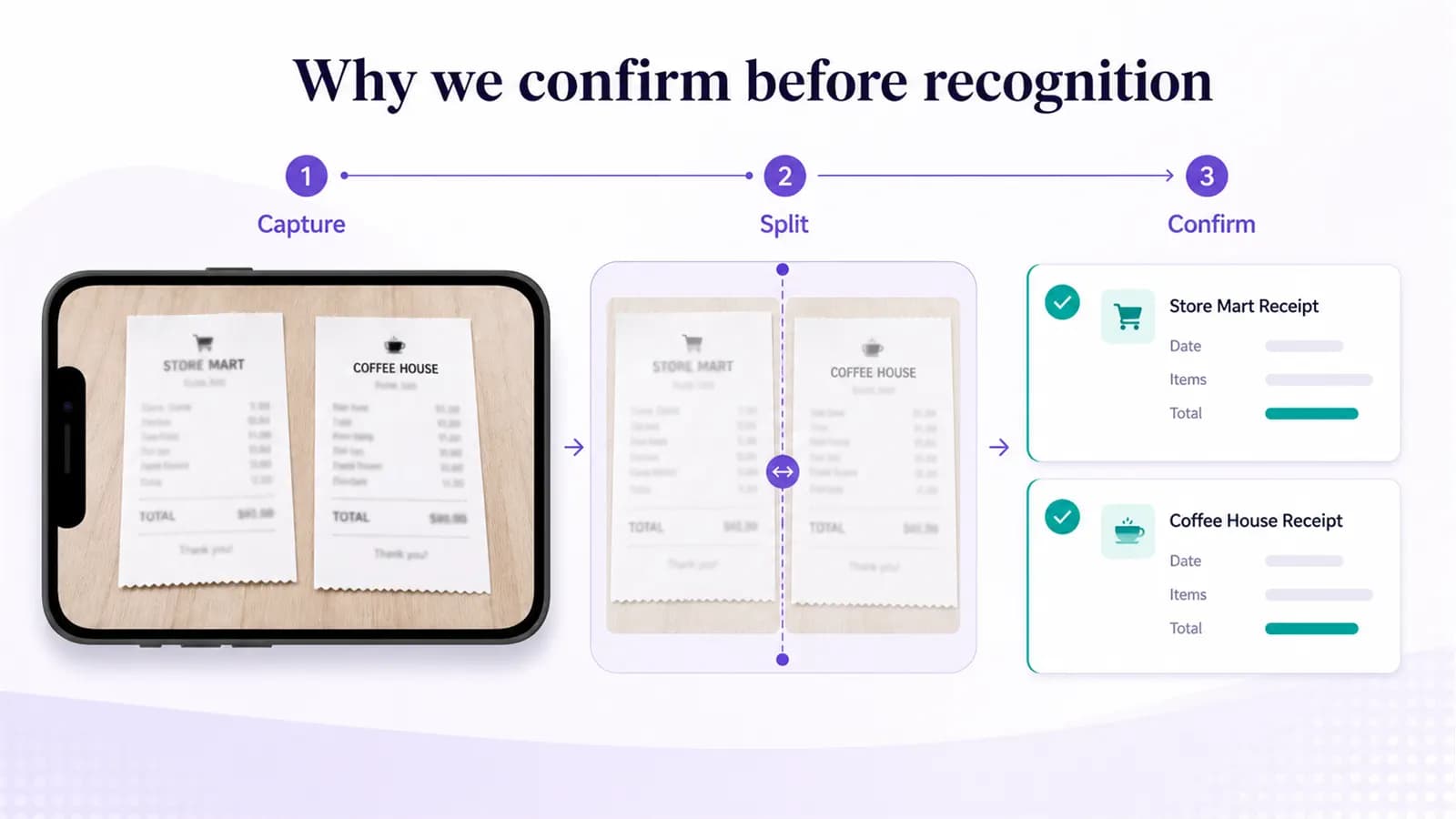
Published by the AI Expense Editorial Team. AI Expense is developed and published by EmuInbox.
Practical answer: Separate hotel, rail, taxi and meal pages before recognition so each transaction keeps the correct source.
Travellers sometimes scan an entire trip into one PDF. That is convenient for submission, but hotel and transport pages describe different merchants, dates, currencies and totals. Recognition should begin only after the document boundaries are understood.
Inspect the PDF as a sequence, not a single invoice
Look for changes in merchant identity, invoice number, transaction date and page numbering. A two-page hotel folio belongs together, while the taxi receipt on the next page should become another record.
Confirm boundaries before extracting fields
Split at the point where one transaction ends and another begins. Keep continuation pages attached even when they contain only terms, line-item overflow or the final tax calculation.
- Do not split every page automatically.
- Do not merge documents merely because they share a trip.
- Preview the first and last page of every proposed record.
Reconnect records through trip context after splitting
Once separate records exist, apply the shared trip reference and review fields individually. This preserves both searchability across the trip and source accuracy for each expense.
Travel PDF split confirmation
- Every record contains pages from only one transaction.
- Multi-page folios retain their continuation pages.
- Each extracted total is supported by its own source.
- The shared trip reference is added after splitting.
Questions people ask in this situation
Can one hotel folio be split by night?
Usually the folio should remain one source document, with nights represented as line items. Split only when the file actually contains separate transactions.
What if a scan contains two receipts in one image?
Use the same boundary principle: separate the visual documents before recognition, then verify each result against its portion of the source.
Where AI Expense fits
AI Expense supports document confirmation and splitting before recognition. After separation, each travel document can retain its own fields and source while remaining searchable under one trip.