Compare a Repair Quote, Work Order and Final Invoice
Keep planned work, completed service and final charges distinct while explaining changes between them.
Published by the AI Expense Editorial Team. AI Expense is developed and published by EmuInbox.
Practical answer: Keep planned work, completed service and final charges distinct while explaining changes between them.
Repair paperwork describes different stages of one service. Treating the quote as the invoice or overwriting it with the final document removes the evidence needed to understand a changed part, added labor or credit.
Label each document by its business role
A quote proposes scope and price, a work order records activity, and an invoice states the final charge. Retain document date, reference and status rather than relying on filenames alone.
Compare scope and amount at line level
Match planned parts and labor with completed work, then identify additions, substitutions, discounts and tax changes. Keep verbal explanations as notes, not as if they were printed on the contractor source.
- Confirm authorization for material changes where required.
- Keep cancelled lines and credits visible.
- Use the final invoice for the completed payable amount.
Preserve the comparison for future service
The document set can explain why the final cost differs and what was actually repaired. Searchable parts and asset context make it useful during a later breakdown.
Repair document comparison
- Quote, work order and invoice are correctly labelled.
- Scope additions and substitutions are visible.
- Final amount reconciles to the invoice.
- All source documents remain accessible.
Questions people ask in this situation
Can the quote be deleted after payment?
Retention depends on the workflow, but the quote may explain authorization and scope changes that the invoice alone does not show.
What if the work order has no price?
Use it as service evidence and rely on the final invoice for charges. Do not invent missing prices.
Where AI Expense fits
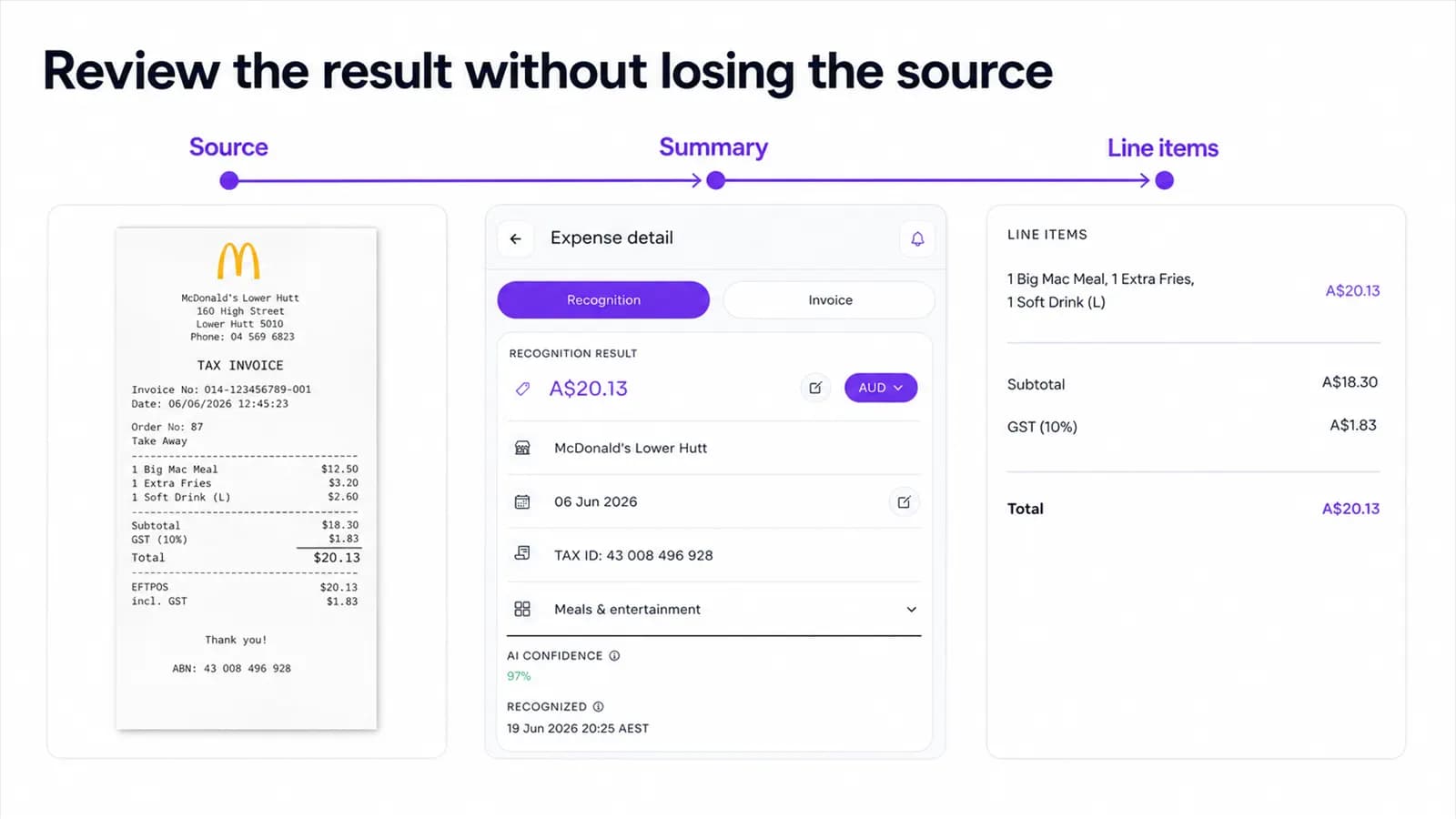
AI Expense can keep several PDFs searchable and retain each source beside recognized fields. Reviewers can compare documents without collapsing their different purposes.